ONE PATH
The labyrinth
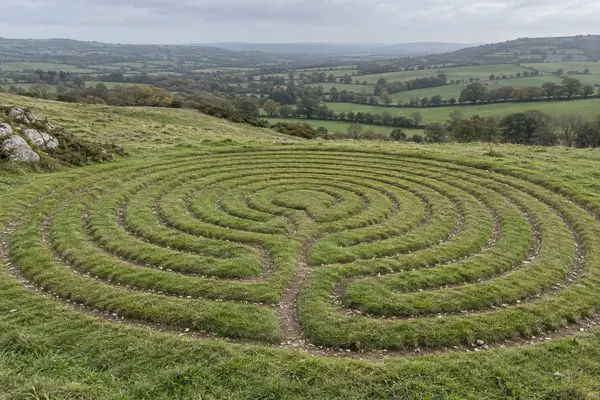
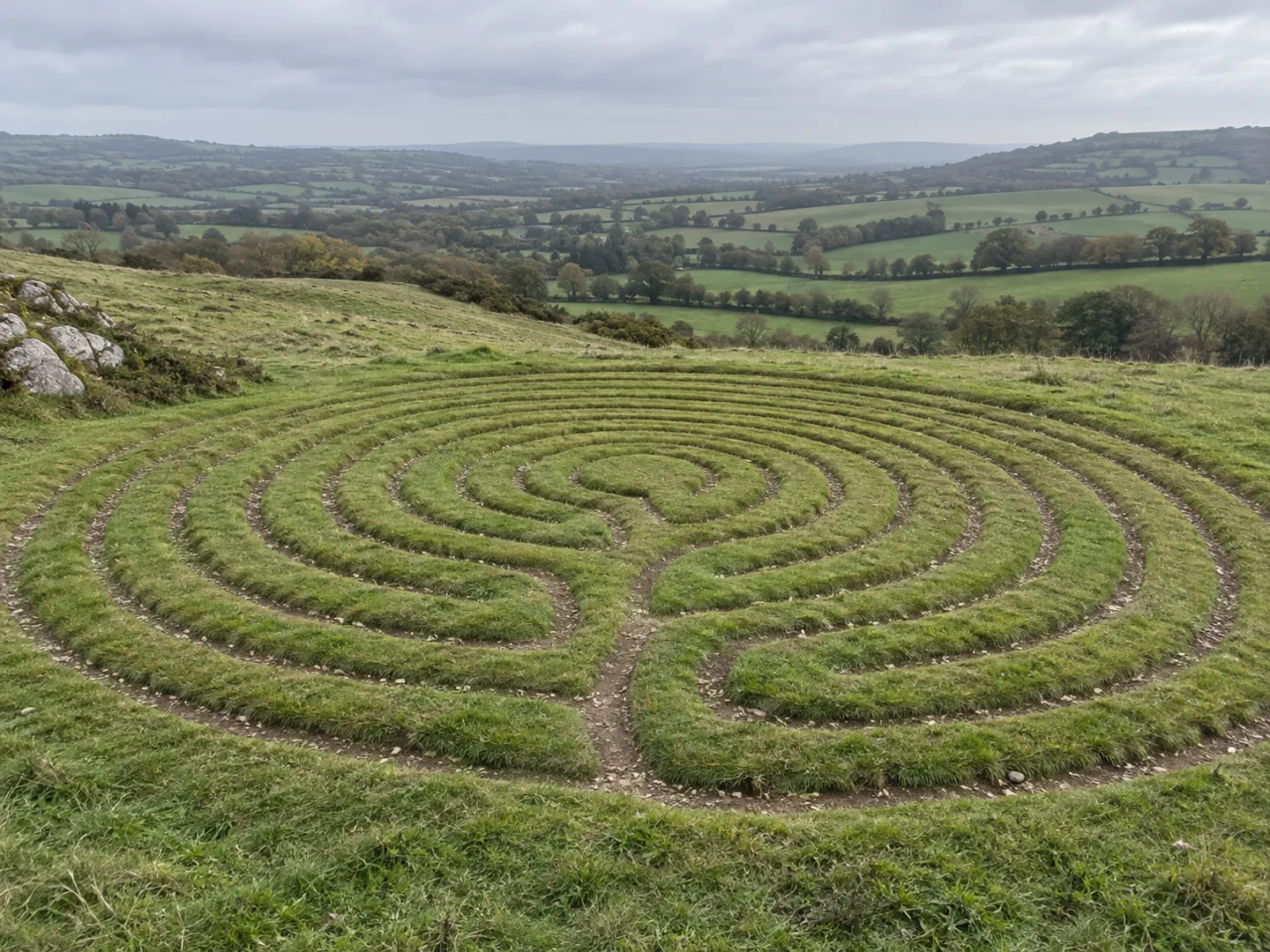
A single winding route with no junctions. You cannot get lost; you just keep walking until you reach the centre.
See a medieval oneMAZES, LABYRINTHS AND HOW TO SOLVE THEM
And the one maze where the rule lets you down.
A labyrinth has one path. A maze makes you choose. From medieval turf labyrinths to the hedges at Hampton Court, here is how they differ, where they came from, and the methods that get you to the middle and out again.
Plain English, with the sources linked.
HAND ON the wall
MAZE OR LABYRINTH?
The words overlap in everyday English,
but the designs work very differently.
ONE PATH
A single winding route with no junctions. You cannot get lost; you just keep walking until you reach the centre.
See a medieval oneMANY PATHS
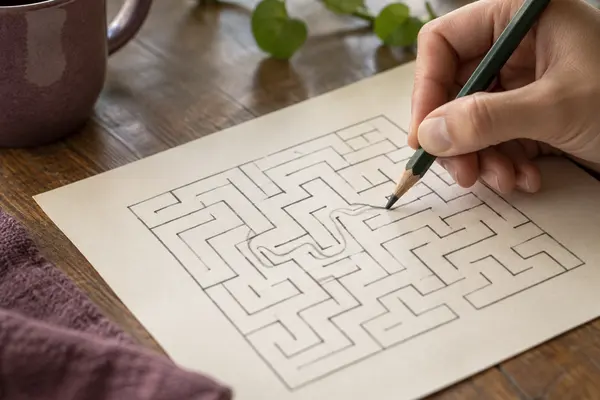
Junctions, choices and dead ends. Puzzle mazes grew up as garden features from the 15th century onwards.
A short historyTHE METHODS
Hand on the wall works surprisingly often. Where it fails, marking your path never does.
Which rule when?WHICH RULE WORKS?
Choose the kind of maze in front of you. The rules come from university notes on maze-solving algorithms, and the labyrinth example from Historic England.
An island is any section of wall that does not join up with the outer wall. You often cannot tell from the inside, so if you pass the same spot twice, switch to marking your path.
TWO ENGLISH CLASSICS
One you walk without a choice,
one you have to think your way through.
11 rings
One path through
This turf labyrinth is just over 12 m across, with a single convoluted path to the centre. Historic England notes it may have been cut by Spalding Priory before 1220.
JULIAN’S BOWER · MEDIEVAL
20 minutes
Average time to the centre
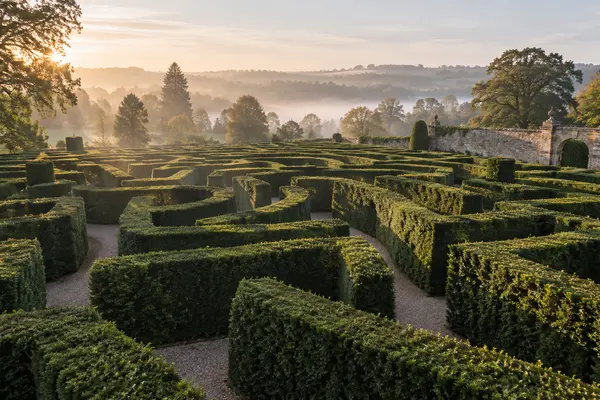
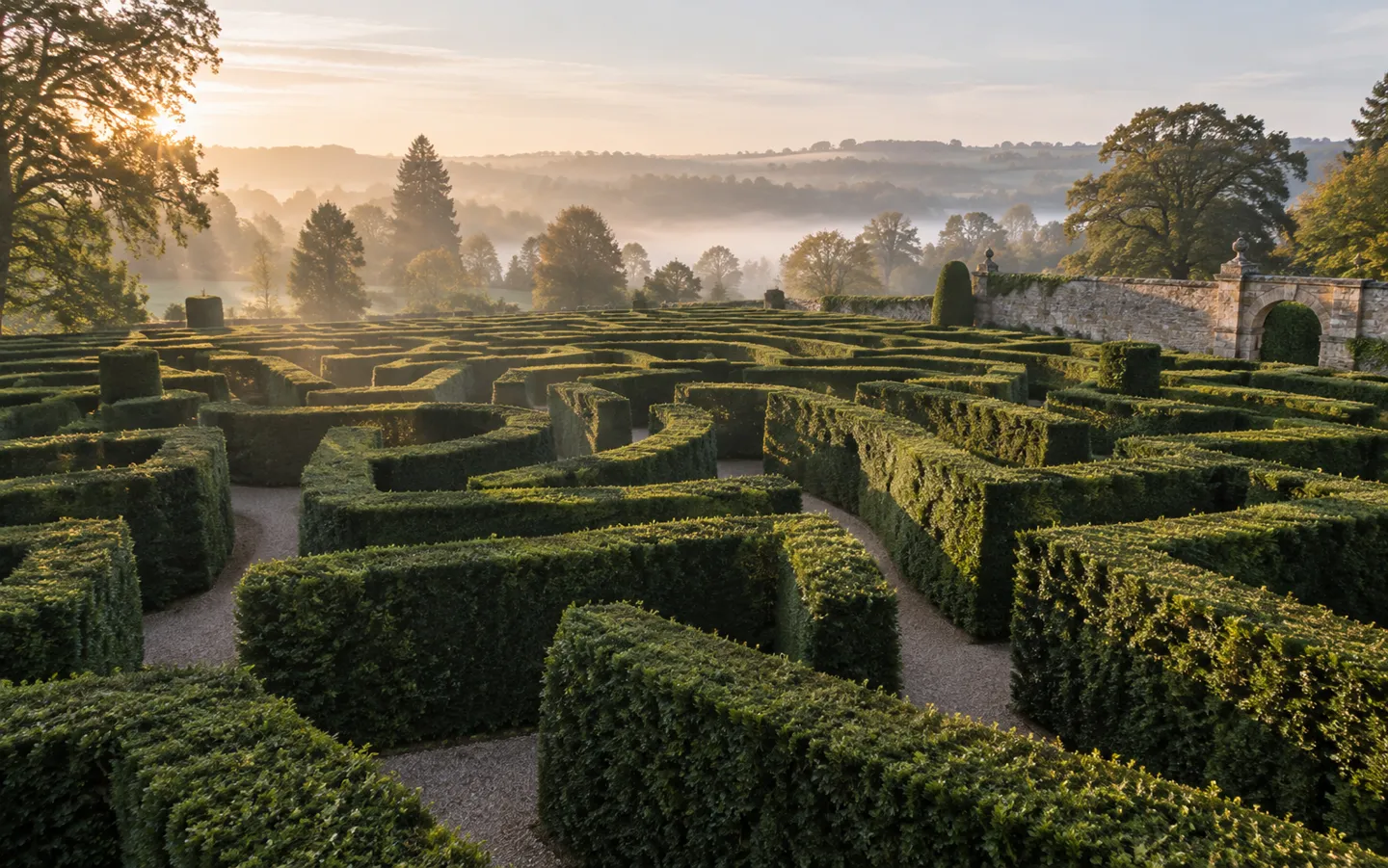
Commissioned by William III and designed by George London and Henry Wise, the maze covers a third of an acre. It was planted in hornbeam and later replanted in yew.
HAMPTON COURT · c.1700
Britannica even prints a route for Hampton Court: go left on entering, right at the first two choices, then left after that.
SOLVE ONE
If the path never splits, it is a labyrinth. Relax and keep walking; the path will take you to the centre.
From the entrance, keep the same hand on the same wall, around every corner and into every dead end. Do not swap hands halfway.
Back at a spot you have already passed without new ground? You are circling an island. Switch to marking your path.
Trémaux style: mark each passage as you enter it, prefer unmarked ones, turn back at dead ends, and never take one with two marks.

MAZE HISTORY
The Cretan labyrinth of the Minotaur story was said to have been built by Daedalus. Britannica notes it is doubtful it ever existed: excavations near Knossos found nothing matching it.
Historic England records more than 100 medieval turf-cut mazes, with about 60 locations known. Fewer than eight are believed to survive where they were made.
The more complicated puzzle mazes, with real choices and dead ends, developed from the 15th century as features of ornamental gardens.
Historic Royal Palaces says it was the first hedge-planted maze in Great Britain. On average it takes about 20 minutes to reach the centre.
Trémaux’s 19th-century way of marking passages was used about a hundred years later as depth-first search, a basic technique in computing.
QUICK QUESTIONS
Short answers to the questions people ask most.
In everyday use the words overlap, and Britannica treats them as alternative names. Many people now use labyrinth for a design with one winding path and no choices, like the medieval turf labyrinths, and maze for a puzzle with junctions and dead ends.
No. It works when the walls all join up with the outside wall and the goal is on that edge. It can trap you in a loop around a free-standing section of wall, and it may never reach a goal in the middle that sits on such an island.
A 19th-century method credited to Charles Pierre Trémaux. Mark each passage as you use it, never enter one with two marks, and turn back at dead ends. It works on any maze with well-defined passages, though not always by the shortest route.
Historic Royal Palaces describes the maze at Hampton Court Palace as the UK’s oldest surviving hedge maze. It was commissioned by William III around 1700 and designed by George London and Henry Wise.
Yes, on set days. The cathedral opens its floor labyrinth to walkers on Fridays from Lent until All Saints’ Day on 1 November, except Good Friday, and it may close for services. Check the cathedral’s own page before you travel.
Sources
A NAME WITH A WAY IN
doodlemaze.com is part of the DoodleSale portfolio. Check the current listing and available purchase or lease options.